
Acute pancreatitis
- The pancreas is a long, flat gland behind the stomach in the upper abdomen. It produces digestive enzymes and hormones, which regulate how the body processes glucose, for instance.
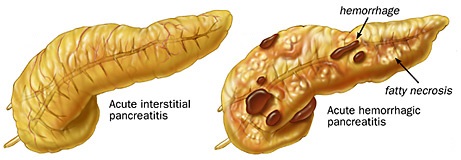
- Pancreatitis is inflammation of the pancreas. It can either be acute, in which case short-term inflammation develops suddenly, or chronic, in which case it is reoccurring or persistent.
- The most commonTrusted Source cause of acute pancreatitis is gallstones, which can become lodged in a bile or pancreatic duct and cause inflammation. Other common causes include excessive alcohol use, genetic conditions, and the use of certain medications.
Causes
Conditions that can lead to acute pancreatitis include:
- Gallstones
- Alcoholism
- Certain medications
- High triglyceride levels in the blood (hypertriglyceridemia)
- High calcium levels in the blood (hypercalcemia), which may be caused by an overactive parathyroid gland (hyperparathyroidism)
- Pancreatic cancer
- Abdominal surgery
- Cystic fibrosis
- Infection
- Injury to the abdomen
- Obesity
- Trauma
Symptoms
Acute pancreatitis signs and symptoms include:
- Upper abdominal pain
- Abdominal pain that radiates to your back
- Tenderness when touching the abdomen
- Fever
- Rapid pulse
- Nausea
- Vomiting
- dark urine